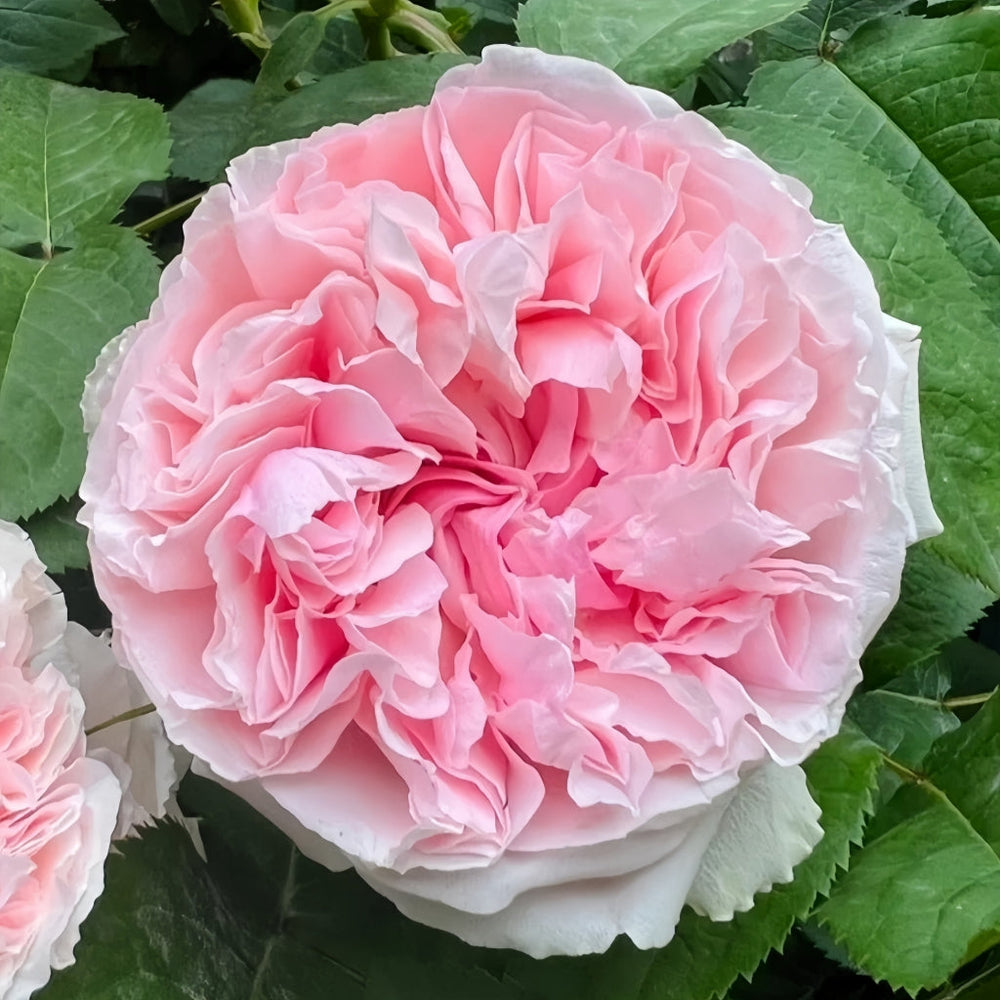


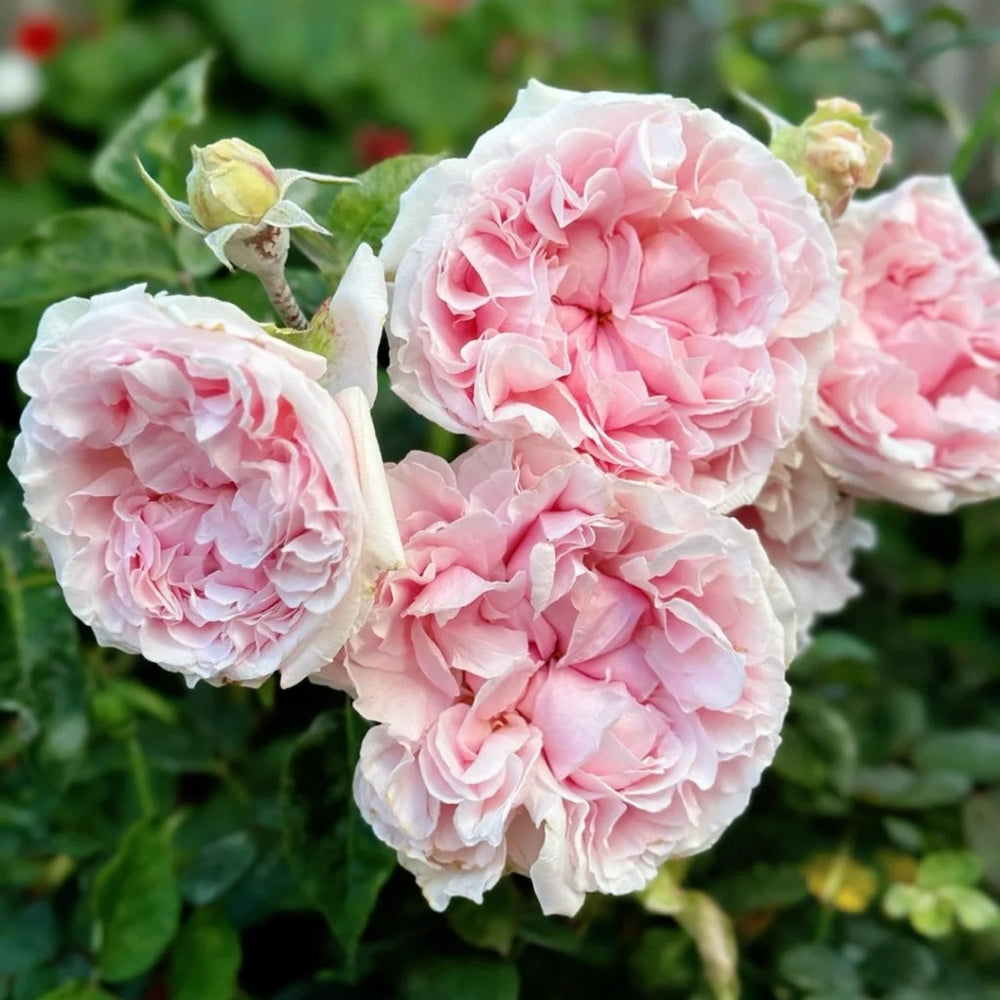


Miranda Rose is a beautiful David Austin rose released in 2007, valued as both a cut rose and shrub rose. Also known by the synonym AUSimmon, this variety features a graceful contrast of white outer petals and a soft pink center, creating a romantic and refined appearance. Its large 8–10 cm cup-shaped blooms are formed by many wavy petals with softly waved edges. With light pleasant fragrance, strong disease resistance, moderate heat tolerance, cold hardiness down to -15℃, and repeat blooming from spring to autumn, Miranda Rose is a versatile choice for balconies, containers, garden planting, and indoor bouquets.
David Austin Rose
White Pink Rose
Cut and Shrub Rose
Wavy Petals
Repeat Blooming
Product Details
| Name | Miranda Rose |
|---|---|
| Synonyms | AUSimmon |
| Origin | David Austin |
| Release Time | 2007 |
| Rose Type | Cut Roses / Shrub Roses |
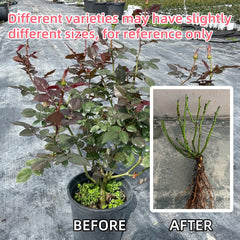
| Plant | 2-year-old live plant with strong roots |
| Plant Height | Approx. 60–100 cm |
| Flower Diameter | Approx. 8–10 cm |
| Petal Count | Large cup-shaped blooms with many wavy petals |
| Color | White outer petals with a soft pink center |
| Fragrance | Light and pleasant fragrance |
Why Choose Miranda Rose?
Miranda Rose is admired for its elegant two-tone flower color. The outer petals tend toward white, while the center opens in a soft pink shade, creating a delicate contrast that feels romantic, clean, and graceful. This color combination works beautifully in balcony displays, garden borders, soft-toned rose collections, and refined floral arrangements.
This David Austin variety also offers practical growing value. The plant grows to approximately 60–100 cm, making it suitable for containers, balconies, courtyard planting, and garden beds. Its large cup-shaped blooms, wavy petals, long blooming period from spring to autumn, and strong disease resistance make Miranda Rose a dependable choice for gardeners who want both beauty and manageable care.
Garden Performance
- White outer petals with a soft pink center for a graceful two-tone appearance.
- Large 8–10 cm cup-shaped blooms with many wavy petals and softly waved edges.
- Light and pleasant fragrance, suitable for gardens and indoor bouquets.
- Repeat blooming across multiple seasons, from spring to autumn.
- Strong disease resistance, especially good resistance to powdery mildew.
- Moderate heat tolerance and preference for warm growing environments.
- Cold hardy down to approximately -15℃ under suitable conditions.
Best For: Gardeners, florists, and rose collectors looking for a David Austin cut and shrub rose with white outer petals, soft pink center, wavy cup-shaped blooms, light fragrance, repeat flowering, and strong disease resistance.
Basic Care Tips
Plant Miranda Rose in a sunny location with fertile, well-drained soil. Provide at least 6 hours of direct sunlight per day to support healthy growth, strong flowering, and better color development. Water deeply when the top layer of soil begins to dry, and keep the plant well ventilated to reduce disease pressure. This variety performs best in a warm environment but can tolerate cold conditions under proper protection. Prune after flowering to encourage new stems, maintain a balanced shape, and support repeat blooming from spring to autumn.
Frequently Asked Questions
What color is Miranda Rose?
Miranda Rose features white outer petals with a soft pink center, creating a delicate and romantic two-tone effect.
Does Miranda Rose have fragrance?
Yes. Miranda Rose has a light and pleasant fragrance, suitable for garden spaces and indoor flower arrangements.
What is the flower shape of Miranda Rose?
It produces large cup-shaped blooms composed of many wavy petals with softly waved edges.
Does Miranda Rose bloom repeatedly?
Yes. Miranda Rose can bloom repeatedly across multiple seasons, from spring to autumn, under suitable growing conditions.
Is Miranda Rose disease resistant?
Yes. Miranda Rose has strong disease resistance, especially good resistance to powdery mildew.
Can Miranda Rose be grown in containers?
Yes. Its approximate 60–100 cm height makes it suitable for balcony containers, large pots, garden beds, and courtyard planting.
Is this a live plant?
Yes. This product is a 2-year-old live rose plant with strong roots.
Shipping Rates
Each order is carefully packed and shipped to you. Shipping rates are determined by the order total:
Under $148: $50
$149 or more: Free
At this time, we ship to addresses within the United States. For international orders, please contact us directly, and we’ll work with you to find a suitable logistics solution.
Delivery Time
We typically need 5–7 business days to process orders, and shipping usually takes another 3–5 business days.
Bare Root Roses Shipping
Bare root roses are live plants with seasonal availability. To ensure the best chance of success, we schedule shipments according to the appropriate planting window for your region, generally between January and May and September and December. Depending on your order date, delivery may occur in the following planting season.
Returns
We take great pride in the quality of our roses and the care that goes into packaging each order. All shipments are sent via USPS, UPS, or FedEx. In the rare event that your roses arrive in unsatisfactory condition, please contact us within 48 hours at support@museroses.com. We’ll do our best to send a replacement of the same or a comparable variety, subject to availability. Alternatively, you may choose to keep the purchase amount as credit for a future order. Or you may return the roses after obtaining our approval, and we will issue a refund once we receive them.
Because roses are perishable items, we are unable to accept any returns or refund requests made without our prior authorization.
Refunds
If you wish to cancel your order and request a refund prior to shipment, please reach out to us promptly. We usually need 3 business days to process the refund, and an additional 7 business days for the credit to be reflected in your account.
Plant Warranty & Replacement Policy
At Muse Roses, we stand behind the quality of our plants and want you to feel confident shopping with us.
If your plant arrives dead, please email us at support@museroses.com within 72 hours of delivery with your order number and clear photos. Once confirmed, we will provide a free replacement.
We also offer a 30-day warranty from the date of delivery. If your plant dies within that period, please contact us with your order number and clear photos. Approved claims will receive a free replacement with the next order.
Please note that we are unable to offer free replacements for plants reported more than 30 days after delivery.
Please note that free replacements under the 30-day warranty are shipped with your next order, not as a separate shipment.
Thank you for your understanding and for choosing Muse Roses.
Rose Planting and Care Guide
Light
Roses thrive in sunlight. During the growing season, they need at least 6 hours of direct light each day. Without sufficient light, they may not bloom — or the blooms may not fully develop.
Temperature
Roses prefer a cool to warm climate, with an optimal temperature range of 18–28°C. When temperatures exceed 33°C, growth may slow. If exposed to intense sun and high heat, provide some shade during midday.
Soil
Use loose, well-aerated, nutrient-rich soil with good drainage. A recommended mix: 40% peat moss, 20% coconut coir, and 40% garden soil.
Water & Fertilizer
Water regularly, but be careful not to overwater. When planting, use organic sheep manure as a base fertilizer. For weekly feeding, a diluted water-soluble fertilizer works well throughout all stages of growth.
Pruning
Prune regularly based on growth needs. Remove diseased branches, deadwood, thin stems, overly dense growth, spent blooms, and excessively long branches by cutting them back. When removing old branches, cut them off at the base.


- Choosing a selection results in a full page refresh.